
 Place-Based Media for Multicultural Audience Growth">
What is place-based media and why it matters now
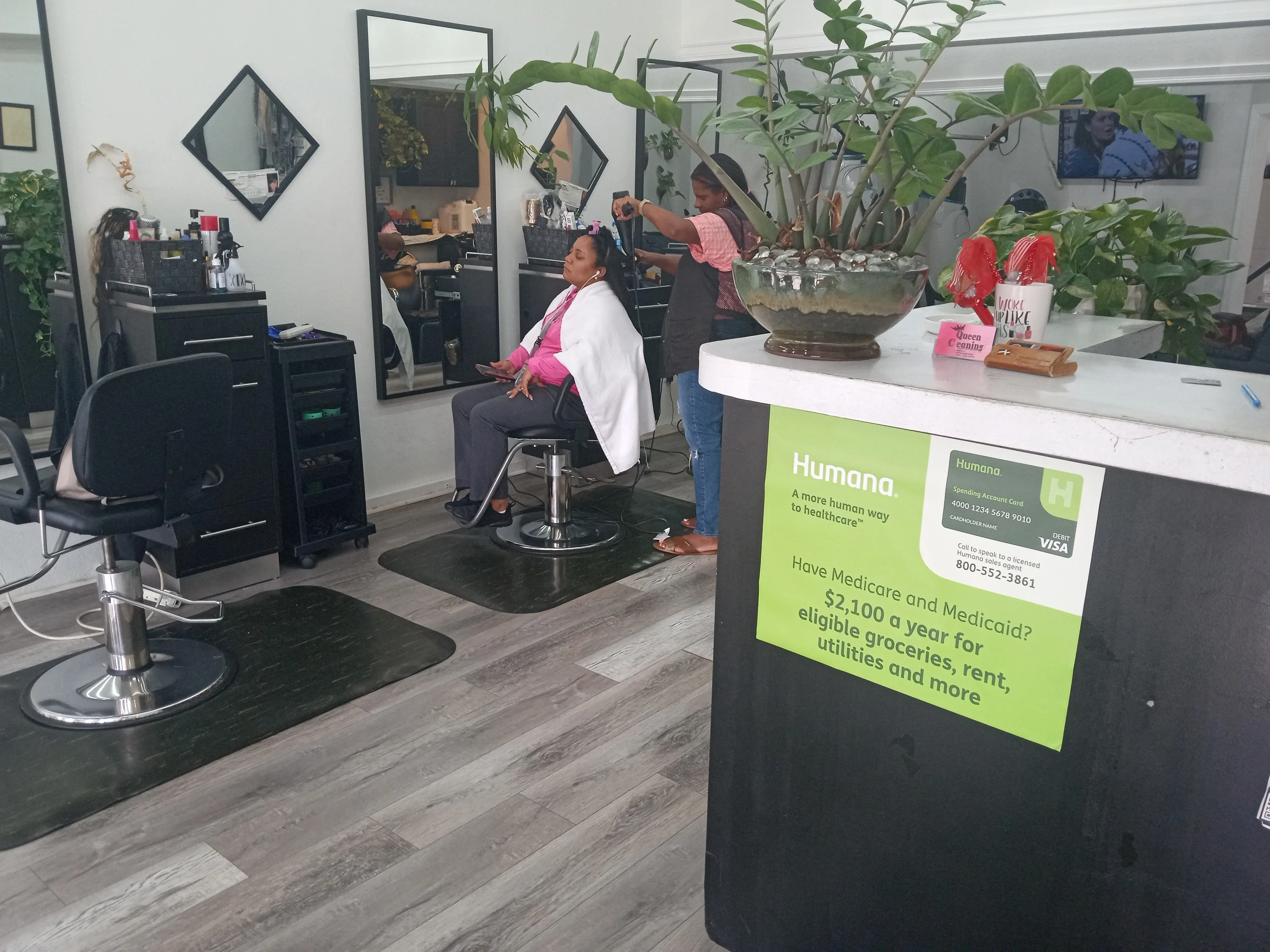
Place-based media is advertising that appears in specific real-world venues, like barbershops, convenience stores, salons, community centers, gyms, and restaurants, so brands can reach people where they live, work, play, and pray. By matching message to environment, it creates context that feels helpful instead of intrusive.
Unlike broad out-of-home (OOH) formats such as highway billboards, place-based media lives inside or immediately around the spaces people already trust and frequent every day. Think posters in neighborhood bodegas or branded messaging in barbershops and nail salons. The shared thread is proximity to real behavior and daily routines.
This environment unlocks three core advantages. First, contextual relevance: the message fits what someone is doing in that moment, whether it’s shopping, working out, or getting a haircut. Second, attention: there’s less visual clutter than on a highway, so your creative stands out. Third, precision: you can target specific ZIP codes, neighborhoods, and even types of venues.
Industry data shows why this matters. U.S. multicultural advertising and marketing spending surged to a record $45.83 billion in 2024, growing at its fastest rate in over a decade. (PRWeb) And the opportunity is only getting larger: Collage Group projects the U.S. will become majority multicultural by 2042, with 42% of the population already from a multicultural background. (SmartBrief) For brands, place-based media offers one of the most direct ways to show up authentically in those communities.
For marketers, especially those trying to reach diverse and multicultural audiences, this is a powerful opportunity. Place-based campaigns can go hyper-local, down to a single neighborhood corridor or cultural enclave, while still scaling across hundreds of venues nationwide. The result is media that feels like it belongs to the community, not something that was air-dropped in from the outside.
How place-based media engages multicultural audiences where they are
Place-based media engages multicultural audiences by meeting them inside the community spaces they already trust, using messaging that speaks to their lived reality. This combination of proximity and relevance builds authenticity and attention.
The stakes are high. Black buying power is projected to surpass $2 trillion by 2026, up from $1.7 trillion in 2024 (Britopian), and that's just one segment of the story. The University of Georgia's Selig Center for Economic Growth projects that by 2026, more than $1 out of every $5 of U.S. disposable income will belong to Black, Asian, multiracial, and Native American consumers, while Hispanic shoppers are expected to control 12.1% of total U.S. disposable income. (Adweek) For brands still treating these audiences as secondary, the math no longer supports that position.
Yet many of these audiences are still underserved or misrepresented in mainstream media. Generic messaging and one-size-fits-all targeting can easily feel out of touch. Place-based media flips that dynamic by starting with the community first: where people gather, what languages they speak, and what venues feel like true neighborhood staples.
At Moderne, this often begins with a hyper-targeting ZIP code analysis layered with on-the-ground relationships. If a brand wants to connect with Black small business owners in South Los Angeles, for example, placements might focus on the barbershops, nail salons, restaurants, and convenience stores those owners and their customers visit daily. The same principle applies to reaching Hispanic families through Spanish-language neighborhood shops.
Industry research supports this approach. According to a study by the Out of Home Advertising Association of America (OAAA) and Morning Consult, multicultural consumers are more likely than the general population to notice OOH ads while on shopping excursions — Black adults at 78%, Hispanic adults at 76%, and Asian adults at 73%, compared to 68% of adults overall. (OAAA) When those messages are also culturally and linguistically tuned, they don't just drive awareness — they earn trust.
In practice, that might look like a bilingual health campaign in community clinics and pharmacies, or financial education posters in barber chairs and salons where conversations about money and opportunity naturally happen. By aligning message, language, and place, brands show they understand and respect the communities they’re speaking to.
Designing a culturally fluent place-based campaign with Moderne
A culturally fluent place-based media campaign starts with understanding exactly who you’re trying to reach, how they move through their day, and which community spaces they see as their own. Moderne builds every program around this discovery phase before a single poster is printed or a single venue is booked.
Step one is audience definition. When a brand or agency approaches Moderne with a goal like “reach multicultural small business owners” or “connect with Hispanic families,” the team conducts a deep dive into demographic, psychographic, and geographic data. That includes ZIP code-level analyses to understand where target audiences actually live, work, and socialize, not just where a national media plan assumes they are.
Step two is venue strategy. Using more than 30 years of experience and long-standing in-market relationships, Moderne curates venue lists that reflect real neighborhood life: barbershops and hair salons, supermarkets and corner stores, nail salons, coffee shops, restaurants, and more. The goal is to surround the audience’s routine so they encounter the message multiple times in authentic contexts.
The Los Angeles County Economic Opportunity Grant Program is a concrete example. In partnership with Lendistry, Moderne installed posters in 247 community venues across five districts, targeting local small business owners impacted by COVID-19. These placements weren’t random. The venues were chosen because they already served as daily touchpoints for entrepreneurs and workers in the community.
Step three is creative and cultural alignment. For multicultural campaigns, that may include bilingual copy, imagery that accurately reflects the community, and sensitivity to local norms, traditions, and aspirations. Research shows, for example, that Hispanic consumers are more loyal to brands that advertise in Spanish and signal respect for their heritage, and that African American consumers respond to brands perceived as authentic, socially conscious, and culturally aware.
By integrating these insights into both media and messaging, Moderne ensures campaigns don’t just appear in multicultural neighborhoods, but they belong there.
Tactics that turn posters into high-impact experiences
Well-executed place-based media goes beyond simply hanging posters. Thoughtful tactics, like sensory elements, QR codes, and strategic placement inside venues, turn static pieces into multi-touch, measurable experiences that guide consumers from awareness to action.
One foundational tactic is smart positioning. Posters are placed where people naturally pause: near checkout counters, waiting areas, mirrors in salons, or seating zones in cafés. That dwell time gives your message more than a passing glance. In the Los Angeles County grant campaign, for example, posters in corner stores and barbershops reached business owners during everyday moments, not just while they were online.
Adding interactivity makes those impressions more valuable. QR codes on posters can drive viewers directly to applications, microsites, apps, or social channels. For public programs like grants or health services, this turns a neighborhood wall into a digital gateway, no need for someone to remember a URL later. Moderne often uses QR codes to create a measurable call to action, tracking scans to see which venues, neighborhoods, or creative versions perform best.
Sensory design can deepen engagement further. Scented posters, for instance, can align with product attributes (like a coffee aroma near a café promotion) or simply make the creative more memorable. Research in environmental psychology consistently shows that scent can increase recall and emotional response, and Moderne incorporates this tactic when it fits the brand story and environment.
Finally, campaigns can layer physical and digital. A poster might feature a QR code that unlocks a social filter or directs shoppers to an influencer-led video in their language. This blends grassroots authenticity with digital reach, capturing both in-venue attention and online engagement. The result is a compact but powerful ecosystem: see the poster, scan the code, take immediate action.
Measuring impact: from impressions to real-world outcomes
A common concern among marketers is how to prove that place-based media is doing more than just “looking good” in the field. Moderne addresses that head-on by designing campaigns with clear KPIs, robust tracking, and concrete outcomes tied to business or program goals.
At a baseline, every place-based program includes core media metrics: the number of venues, total posters or units, and estimated impressions based on foot traffic and venue type. For the LA County Economic Opportunity Grant Program, Moderne installed 247 posters across five districts, generating an estimated 6,384,950 impressions. But the real story was downstream: the broader effort helped drive over $54 million in funding across 6,800 grants to local businesses.
To tighten the attribution loop, campaigns frequently use QR codes or short, memorable URLs. When someone scans a code from a barbershop mirror or bodega door, that interaction can be tracked to the specific location, neighborhood, or creative version that prompted it. This data helps brands understand which communities are most engaged and where additional support or optimization may be needed.
Marketers can also integrate place-based activity with CRM and digital analytics. For example, a financial services brand might compare lead volumes or application completions by ZIP code before and after a grassroots poster blitz in specific corridors. Paired with demographic data, that analysis can reveal how well the campaign is resonating with multicultural or underserved segments.
Qualitative feedback rounds out the picture. Moderne’s field teams and venue partners often report back on how customers talk about the campaign, what questions they ask, and how the creative is received. Those insights, combined with hard numbers, make it easier to justify future investment in place-based media as a reliable driver of both awareness and action.
When to choose place-based media in your channel mix
Marketers should prioritize place-based media when they need hyper-local relevance, authentic community presence, or deeper engagement with multicultural and underserved audiences that mass channels struggle to reach. It’s especially effective for education, behavior change, and grassroots awareness at the neighborhood level.
Place-based is a strong fit when you’re:
- Launching programs for small businesses, health services, grants, or public resources that require trust and clarity.
- Trying to reach multilingual or multicultural audiences in specific corridors or ethnic enclaves.
- Supporting or amplifying experiential activations, street teams, or digital campaigns with persistent, in-venue visibility.
Because it can be mixed and matched with other channels, place-based works well alongside experiential, broader OOH, and digital marketing. For example, a brand might run digital projections on city buildings to create buzz, support that with street team outreach, and then sustain the message with interior posters in local shops and salons. Moderne’s integrated Experiential, Media, and Digital teams are structured to plan, buy, and activate that full journey.
In a media environment where generic ads are easy to ignore, place-based campaigns stand out by feeling like part of the neighborhood fabric. They show up where people actually live their lives and speak in ways that reflect their culture, language, and priorities. For brands that want to grow with multicultural America, this is no longer optional. It’s the foundation of an inclusive, effective marketing strategy.
If your current media mix isn't reaching diverse communities at the neighborhood level, place-based media may be the missing piece. Let's talk about what a culturally fluent campaign could look like for your brand. Schedule a call today.