
 7 Ways OOH Advertising Builds Brand Visibility">
Consumer brands today face a significant challenge: digital advertising costs continue to rise while audience attention fragments across countless platforms. Out-of-home advertising offers a proven path through that noise. At Moderne Communications, we've seen firsthand how OOH campaigns help brands build lasting visibility where their audiences actually spend time.
This article explores seven specific ways OOH advertising strengthens brand presence beyond digital channels. You'll discover tactics that range from place-based media in community venues to eye-catching digital projections that turn buildings into canvases.
Quick guide: 7 ways OOH builds brand visibility for consumer brands
- Place-based media: Reaches audiences authentically in community venues they trust
- Digital projections: Captures attention with visual spectacle after dark
- Mobile billboards: Brings your message directly to high-traffic areas
- Transit advertising: Turns commutes into brand touchpoints
- Street-level guerrilla tactics: Creates shareable moments in unexpected places
- Experiential activations: Builds emotional connections through interaction
- Integrated OOH campaigns: Amplifies visibility across multiple touchpoints
How we selected these OOH visibility tactics
Consumer brand marketers need OOH strategies that deliver measurable visibility gains without guesswork. We evaluated these seven approaches based on their track record with national brands and their fit for marketers targeting diverse communities.
- Audience reach potential: Does the tactic connect with consumers where they live, work, play, and pray?
- Brand recall impact: Research from the Out of Home Advertising Association of America shows OOH delivers some of the highest ad recall rates across media
- Creative flexibility: Can the format adapt to different brand stories and campaign goals?
- Community authenticity: Does the placement feel like it belongs in the environment rather than intruding on it?
- Integration capability: Can the tactic connect with digital retargeting and social amplification?
- Measurement options: Are foot traffic, impressions, and engagement trackable?
7 proven ways OOH advertising builds brand visibility
1. Place-based media: Reaches audiences in trusted community venues
Place-based media puts your brand inside the locations where your target customers naturally spend time. Think barbershops, salons, laundromats, convenience stores, and local restaurants. These placements feel like part of the community fabric rather than intrusive advertising.
Moderne Communications maintains a network of over 200,000 grassroots venues nationwide. When you place posters in a neighborhood salon or local coffee shop, your message gets repeated exposure to regulars who visit weekly or even daily. That frequency builds recognition over time.
The LA County Economic Opportunity Grant Program illustrates this approach. In partnership with Lendistry, Moderne installed posters in 247 community venues across five districts, generating an estimated 6.38 million impressions. The broader effort helped drive over $54 million in funding across 6,800 grants to local businesses.
Place-based media features
- Hyper-local targeting: Reach specific ZIP codes and neighborhoods where your audience lives
- Repeated exposure: Consumers encounter your message multiple times during regular visits
- Community trust: Placements in familiar venues carry implicit endorsement from those spaces
- Diverse venue options: Choose from barbershops, salons, supermarkets, gyms, medical offices, and more
- QR code integration: Add measurable calls to action that bridge physical and digital engagement
Place-based media pros and cons
Pros:
- Moderne's grassroots network spans 350+ markets with 200,000+ venues for precise geographic targeting
- Messages feel contextually relevant when placed in environments that match your audience's interests
- Cost-per-impression typically runs lower than digital display advertising
Cons:
- Campaign setup requires venue relationship management and poster production lead time
- Creative format works within poster dimensions rather than video or interactive elements
- Visibility depends on venue foot traffic, which varies by location and season
2. Digital projections: Captures attention with visual spectacle
Digital projections turn buildings, landmarks, and urban surfaces into temporary brand canvases. After dark, a well-placed projection stops pedestrians, generates social media shares, and creates memorable moments that traditional billboards cannot match.
This format works particularly well for product launches, entertainment campaigns, and brands seeking cultural relevance. The visual drama of seeing your message projected onto a recognizable building creates instant credibility and buzz.
Digital projections features
- Large-format impact: Building-scale placements command attention across city blocks
- Animation capability: Static, animated, and full projection mapping options bring stories to life
- Social content generation: Night crews capture photo and video documentation for social amplification
Digital projections pros and cons
Pros:
- Creates shareable content that extends campaign reach beyond physical location
- Associates your brand with innovation and creative ambition
- Works in any major market with appropriate building surfaces
Cons:
- Campaigns run primarily at night, limiting daytime visibility
- Weather conditions can affect projection clarity on some evenings
- Permit requirements vary by city and require planning lead time
3. Mobile billboards: Brings your message to high-traffic areas
Mobile billboards move your brand through city streets, targeting rush hour commutes, event venues, and shopping districts. Unlike static placements, mobile units follow audience traffic patterns throughout the day.
Options range from traditional truck-mounted displays to digital screens with rotating content. Some campaigns add 3D elements or holographic technology for additional stopping power.
Mobile billboards features
- Route flexibility: Target specific neighborhoods, events, or competitor locations
- Digital rotation: Update messaging in real time based on location or time of day
- Event support: Position units outside concerts, sports venues, conference centers, and festivals
Mobile billboards pros and cons
Pros:
- Reaches audiences across multiple neighborhoods in a single campaign day
- Creates visibility in areas without available static billboard inventory
- GPS tracking documents exact routes and exposure zones
Cons:
- Traffic conditions affect how many people see the message on any given route
- Exposure time per viewer is shorter than with stationary placements
- Some municipalities restrict mobile billboard routes in certain zones
4. Transit advertising: Turns commutes into brand touchpoints
Transit advertising places your brand on buses, trains, taxis, and within stations where commuters spend significant time. According to YouGov research, 68% of Americans notice billboards, with transit ads also ranking highly for visibility.
This format excels in urban markets where public transportation usage remains high. Your message travels through the city, reaching diverse neighborhoods and demographics throughout the day.
Transit advertising features
- Extended dwell time: Station and interior placements capture attention during waits and rides
- Full-wrap options: Transform entire vehicles into moving brand statements
- Route-based targeting: Select transit lines that serve your priority neighborhoods
Transit advertising pros and cons
Pros:
- Reaches commuters during predictable daily routines
- Interior placements allow for longer-form messaging than typical OOH
- High frequency as regular riders see ads repeatedly
Cons:
- Transit schedules and routes are fixed, limiting targeting flexibility
- Creative production for vehicle wraps requires additional lead time
- Some transit authorities have content restrictions for advertisers
5. Street-level guerrilla tactics: Creates shareable moments
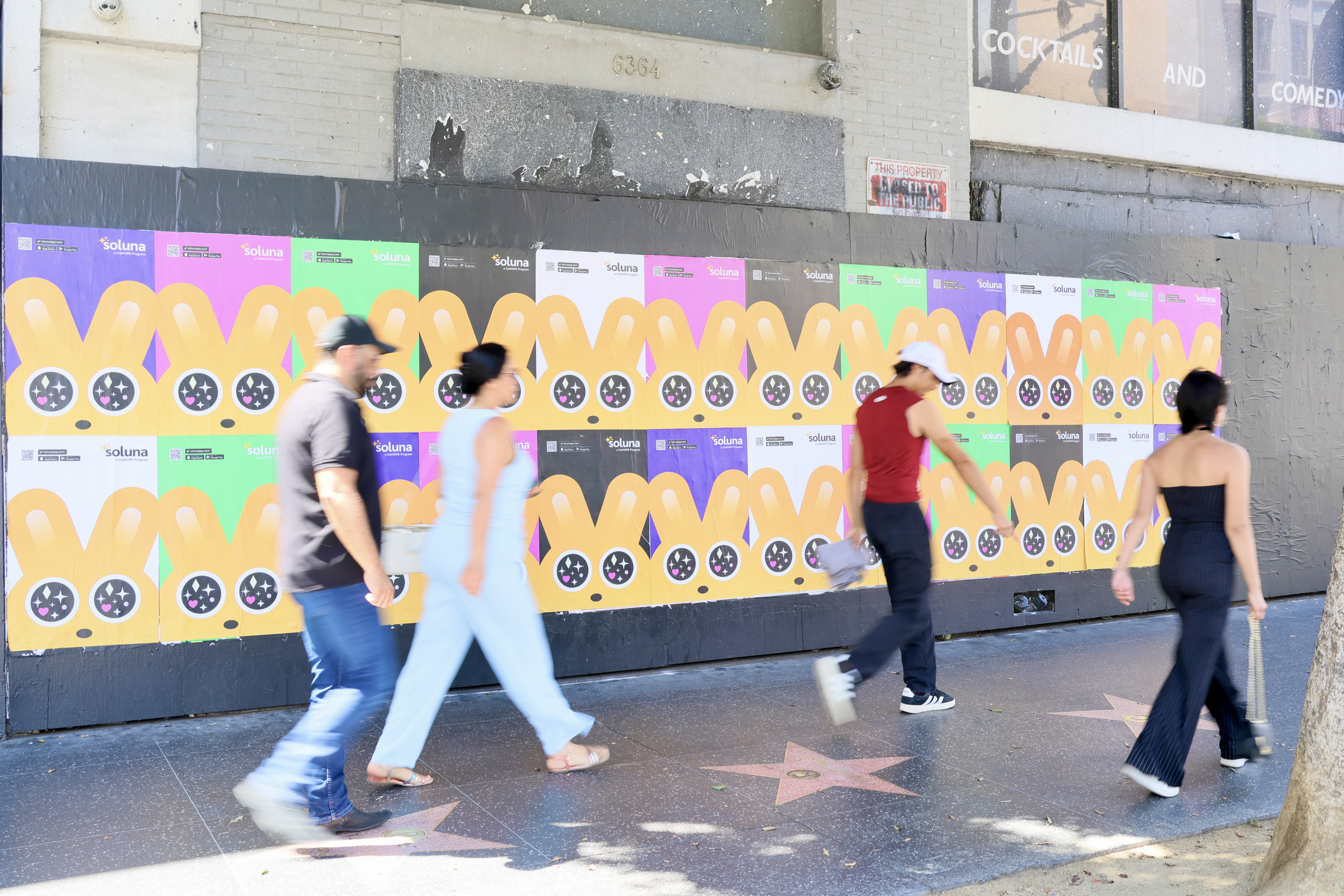
Guerrilla marketing tactics surprise audiences with unexpected brand encounters. Chalk stencils on sidewalks, wheat paste alternative posters on construction walls, and sidewalk decals all interrupt normal routines in ways that feel fresh rather than intrusive.
These placements often become social media content as passersby photograph and share them. A single well-placed guerrilla activation can generate earned media that extends far beyond its physical footprint.
Guerrilla tactics features
- Neighborhood precision: Target specific blocks and business districts
- Creative formats: Chalk stencils, murals, sidewalk decals, and poster campaigns
- Social amplification: Designed for shareability and organic reach
Guerrilla tactics pros and cons
Pros:
- Lower production costs than traditional billboard campaigns
- High engagement rates when placements surprise and delight audiences
- Adaptable to narrow campaign windows and hyper-local targeting
Cons:
- Permit requirements for wall placements vary by property and municipality
- Some formats are temporary by design, requiring campaign pacing decisions
- Weather affects chalk and sidewalk placements in certain climates
6. Experiential activations: Builds emotional connections
Experiential marketing invites audiences to interact directly with your brand. Pop-up shops, sampling programs, mobile tours, and street team activations all create memorable touchpoints that passive advertising cannot replicate.
These experiences generate stories people share with friends and on social media. A sampling moment at a festival or a pop-up installation in a high-traffic retail district creates brand associations rooted in personal experience.
Experiential activation features
- Direct engagement: Consumers touch, taste, and experience your product
- Data collection: Capture leads and feedback through on-site interactions
- Multi-market reach: Mobile tours bring activations to audiences nationwide
- Technology integration: AR, VR, and interactive displays add memorable elements
- Sampling programs: Put product directly into consumer hands
Experiential activation pros and cons
Pros:
- Moderne handles turnkey event production from concept through execution
- Creates genuine emotional connections that drive brand preference
- Generates user-created content and organic social amplification
Cons:
- Requires event staffing and logistics coordination
- Weather and scheduling affect outdoor activation performance
- Lead times for fabrication and permitting require advance planning
7. Integrated OOH campaigns: Amplifies visibility across touchpoints
The most effective OOH strategies combine multiple tactics into coordinated campaigns. A place-based media push in local venues might pair with mobile billboards outside a product launch event, supported by digital projections that generate social content.
Integration also extends to digital. Geofencing around OOH placements allows for retargeting audiences who pass specific locations. Street-level activations fuel social content that extends campaign reach online.
Integrated campaign features
- Cross-channel coordination: OOH, digital, and experiential work together
- Geofenced retargeting: Serve digital ads to audiences who encountered physical placements
- Measurement integration: Track attribution across touchpoints
Integrated campaign pros and cons
Pros:
- Moderne plans, buys, and activates across formats with a single partner
- Maximizes brand recall through repeated multi-format exposure
- Connects physical visibility to digital conversion tracking
Cons:
- Multi-format campaigns require coordination across production timelines
- Measurement attribution across channels involves platform integration
- Budget allocation decisions require clear priority-setting across tactics
Comparison table: 7 OOH tactics for brand visibility
| OOH Tactic | Social Shareability | Geographic Precision | Community Authenticity |
|---|---|---|---|
| Place-based media (Moderne) | Moderate | ZIP-code level | ✓ |
| Digital projections | High | City-wide | ✗ |
| Mobile billboards | Moderate | Route-based | ✗ |
| Transit advertising | Low | Transit-line based | ✗ |
| Guerrilla tactics | High | Block-level | ✓ |
| Experiential activations | High | Event-specific | ✓ |
| Integrated campaigns | High | Multi-level | ✓ |
What makes OOH advertising effective for brand recall?
OOH advertising outperforms many digital channels on brand recall because it appears in the physical world where consumers cannot skip, scroll past, or block the message. Research from a 2025 Kantar study commissioned by Clear Channel Outdoor found that OOH delivers a 13.3% increase in ad awareness compared to digital media, TV, and CTV.
The study also found that OOH matches linear TV in driving brand favorability and purchase intent. For consumer brands seeking visibility that translates to preference, these findings reinforce OOH's role in the media mix.
Place-based media amplifies this effect through repeated exposure. When your poster appears in a barbershop or salon that someone visits every two weeks, you're building recognition through frequency that digital impressions rarely match.
How can consumer brands measure OOH campaign effectiveness?
Modern OOH measurement goes far beyond estimated impressions. At Moderne, we track foot traffic, engagement, sample distribution, QR scans, website visits, and geo-fenced digital performance. This data connects physical visibility to measurable outcomes.
Start by defining what success looks like for your campaign. Brand awareness campaigns might prioritize impressions and recall studies. Product launch campaigns might focus on QR engagement and site traffic. Sampling programs track units distributed and post-campaign purchase intent.
Geofencing adds another measurement layer. By targeting audiences who pass OOH placements with follow-up digital ads, you can track online behavior that resulted from physical exposure. This closes the attribution loop that historically made OOH harder to measure than digital channels.
Why Moderne Communications is the partner for OOH visibility
Consumer brands choose Moderne because we handle every step of OOH campaign execution, from planning through proof of performance. With 30+ years of hands-on experience and a network spanning 350+ markets nationwide, we bring the infrastructure and relationships needed to execute campaigns that actually reach your target audiences.
Our place-based network of 200,000+ grassroots venues means your brand can show up authentically in the communities where your customers live, work, play, and pray. We handle permitting, production, installation, and documentation so you can focus on your broader marketing strategy.
Moderne also brings integration thinking to every campaign. We design activations where street-level visibility fuels social content, experiential moments drive digital retargeting, and place-based placements connect to geo-fenced advertising. You're not buying isolated tactics. You're building coordinated visibility across channels.
Ready to discuss how OOH advertising can strengthen your brand's visibility beyond digital? Let's talk about what an integrated campaign could look like for your brand.
FAQs about OOH advertising for brand visibility
What is out-of-home advertising?
Out-of-home advertising includes any advertising that reaches consumers outside their homes. Formats include billboards, transit ads, place-based posters, digital screens, and experiential activations. Moderne Communications specializes in non-traditional OOH formats like place-based media, digital projections, and guerrilla tactics that help brands connect with audiences in authentic ways.
How does OOH compare to digital advertising for brand awareness?
OOH delivers higher ad recall than most digital formats because consumers encounter it in the physical world without the option to skip or scroll past. The 2025 Kantar study found OOH outperforms digital media across brand awareness, favorability, and purchase intent metrics. Moderne helps brands combine OOH visibility with digital retargeting for integrated campaigns.
What types of businesses benefit most from place-based media?
Consumer brands targeting specific geographic communities see strong results from place-based media. CPG companies launching in regional markets, healthcare organizations reaching underserved populations, and retail brands driving local foot traffic all benefit from poster placements in barbershops, salons, and community venues where their audiences spend time.
How long does it take to launch an OOH campaign?
Timeline depends on format and scope. Guerrilla poster campaigns can launch in two to three weeks. Place-based media campaigns typically need three to four weeks for venue coordination and production. Large-scale experiential activations with custom fabrication may need eight to twelve weeks. Moderne coordinates all permitting and production to keep campaigns on schedule.
Can OOH advertising target specific demographics?
Yes. Place-based media excels at demographic targeting because venue selection determines audience. A campaign in barbershops reaches a different demographic than one in yoga studios or laundromats. Moderne's venue network includes options across neighborhoods, income levels, and cultural communities, allowing brands to reach hyper-targeted audiences where they already gather.
What makes digital projections effective for brand campaigns?
Digital projections create visual spectacle that earns attention and social sharing. When your brand appears projected onto a landmark building after dark, it signals ambition and creativity. Moderne handles digital projection campaigns from permitting through execution and content capture, turning physical installations into social media assets.